
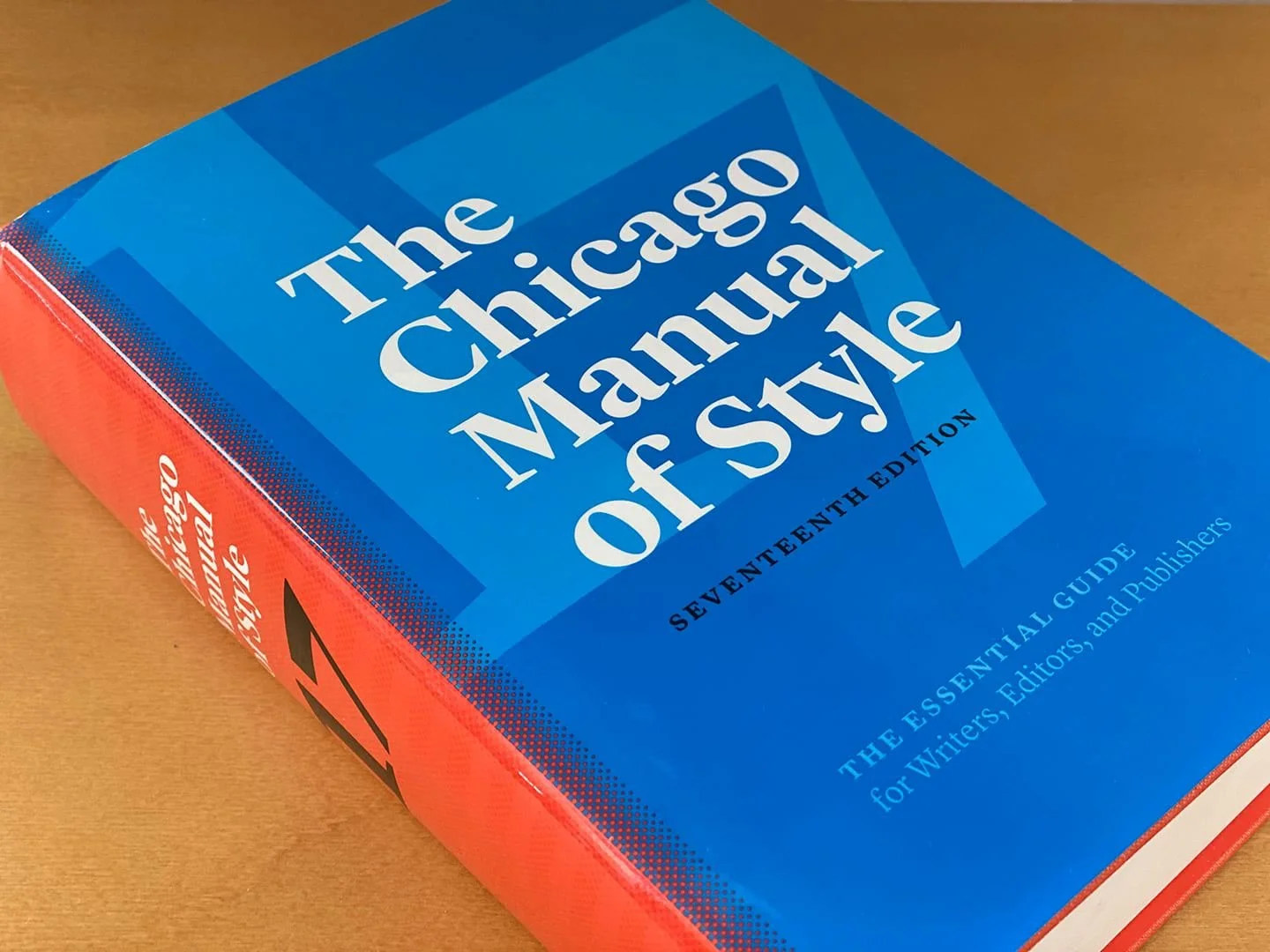
Whether creating quarterly fiscal reports for Fortune 500 companies or producing publications for leading universities, we understand that delivering clear, accurate, and well-written content leaves no margin for error. The Chicago Manual of Style (CMOS) is one of the most widely used style guides in publishing, academia, and professional writing—especially in the humanities. CMOS is valued for its thoroughness, flexibility, and authority, making it especially well suited for long-form, research-driven, and professionally published writing. We utilize the CMOS for the following reasons:
Clarity and Consistency
Chicago provides detailed rules for grammar, punctuation, capitalization, and formatting, helping writers maintain a clear and consistent voice throughout a document. This consistency makes complex texts easier for readers to follow.
Flexibility for Different Types of Writing
Unlike some more rigid style guides, Chicago is highly adaptable. It supports:
• Books and long-form manuscripts
• Academic papers (especially history, literature, and philosophy)
• Professional and trade publishing
This flexibility makes it useful for both scholarly and non-academic work.
Two Citation Systems to Choose From
Chicago offers two well-established documentation systems, allowing writers to choose what fits their discipline best:
• Notes and Bibliography (footnotes/endnotes), common in the humanities
• Author–Date, common in social and natural sciences
This versatility is a major advantage over guides that enforce a single citation method.
Strong Support for Source Transparency
Chicago’s emphasis on thorough citation—especially via footnotes—allows writers to:
• Provide detailed source information
• Add contextual or explanatory notes
• Demonstrate credibility and depth of research
Readers can easily trace ideas back to original sources.
Industry Standard in Publishing
Many book publishers, academic presses, and journals use Chicago as their default style guide. Using it increases the likelihood that a manuscript will:
• Meet editorial expectations
• Require fewer revisions during publication
This makes Chicago especially valuable for aspiring authors and scholars.
Comprehensive and Authoritative Guidance
CMOS is known for its depth. It addresses not just citations, but also:
• Usage and grammar questions
• Editorial best practices
• Tables, figures, indexes, and front/back matter
It often serves as a go-to reference for tricky or uncommon writing situations.
Encourages Professional Writing Standards
By following Chicago style, writers learn to:
• Think carefully about structure and attribution
• Present arguments in a polished, professional way
• Adapt their writing for serious academic or publishing contexts
Cut Once provides insightful and effective brand and marketing services that help organizations in the Retail, Health, Wealth, and Education, sectors communicate with greater clarity and impact.
www.CutOnceDesign.com
(717) 841-0400
Services: advertising, branding (visual and verbal), digital, editorial design, environmental design, graphic design, marketing strategy, naming and brand identity, photography and illustration, retail and packaging design, SEO and PPC, social media, wayfinding and signage, website design, website development